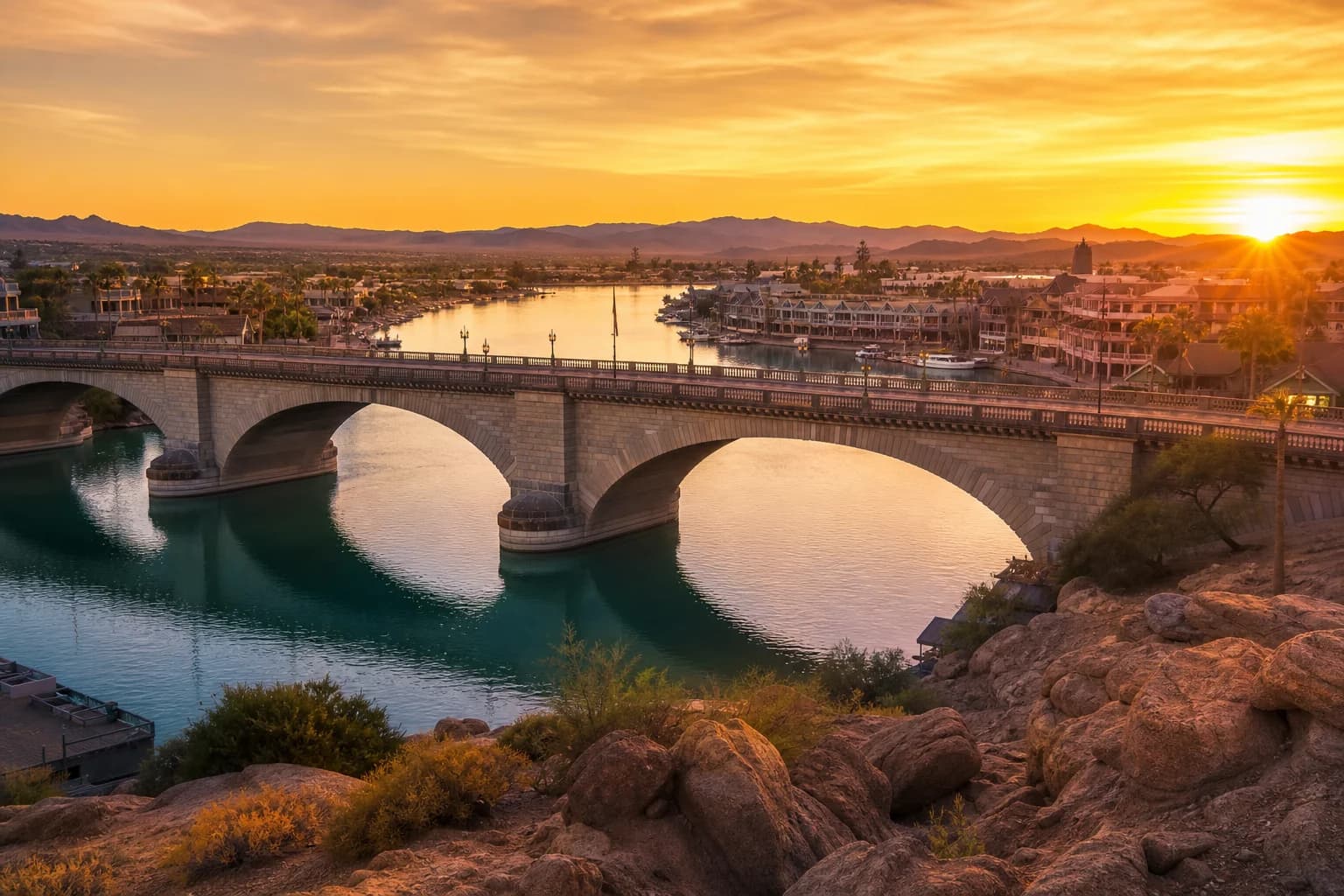
Lake Havasu City was founded in 1964 by industrialist Robert McCulloch, who purchased 3,500 acres of desert along the Colorado River and relocated the original London Bridge to span a channel connecting the main lake to Thompson Bay. That origin shapes everything about how construction works here today. The city sits on a broad desert bench above the lake, with neighborhoods that fan out from the bridge through a mix of original 1960s ranch-style homes, lakefront custom properties, manufactured housing on larger lots, and a growing number of modern infill builds on the remaining vacant parcels.
Desert construction in Lake Havasu City means planning for sustained summer temperatures that regularly exceed 115°F and occasionally reach 120°F or higher. Concrete pours, stucco curing, asphalt work, and exterior painting all have to be scheduled around heat windows. The soil beneath much of the city is hardpan caliche, a cemented calcium carbonate layer that can stop an excavator cold and significantly change foundation costs compared to what a homeowner might expect from coastal California construction. Monsoon season from July through September brings short but intense downpours that test drainage design, retaining wall detailing, and site grading on every project.
We approach every Lake Havasu City project with that desert context built in: heat-resistant material selections, caliche-aware excavation budgets, drainage that handles monsoon runoff, and permit coordination with the City of Lake Havasu City Development Services Department from day one.